


Wendy Stevens of Toronto describes herself as “an optimist, organized, practical and a problem-solver.” These traits have served her well at work and at home, as mother of two sons, 28 and 33, and wife to Victor.
Her younger son is autistic with intellectual disabilities and lives at home. Her older son is married, he and his wife are expecting their first child this summer.
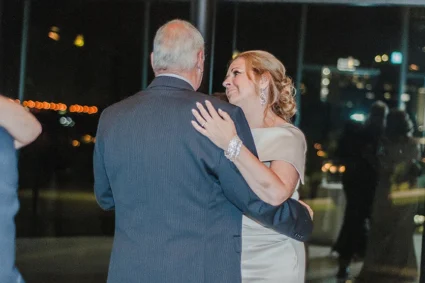
When Victor was diagnosed with IPF (idiopathic pulmonary fibrosis) in 2017, he was 57 years old. “We were in shock,” she says, “and when we read the terrible information online about most people only living a few years with this disease, it was devastating. I thought about all the things he would miss, like our son getting married and having grandchildren.”
Victor was referred quickly to the ILD Clinic at Toronto General Hospital and began treatment with the anti-fibrotic nintedanib (Ofev) right away. In problem-solver mode, Wendy went to Victor’s appointments with him and learned all she could.
“I realized how fortunate we were to be in Toronto, where we had access to the specialized care Victor needed,” reports Wendy. “I’ve since learned that that is not the case everywhere in the country.”
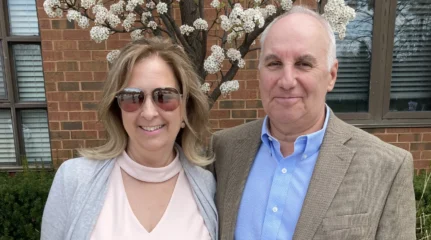
Changes in her caregiving role
For a few years, Victor’s disease progressed slowly. He gradually slowed down at work, got tired more easily and the medication made him nauseous. His wife and son encouraged him to retire early and focus on his health and other things he wanted to do. Wendy continued to work full-time, as she does today. During the pandemic, she worked mainly from home, which has now become a hybrid work environment.
Wendy’s caregiving role was not overly demanding at first. Victor could still take care of himself for the most part. As breathing became more difficult and he declined physically, Wendy started to do more around the house, choosing to hire people to help out where possible (things like snow shoveling and grass cutting that Victor could no longer do). It’s important to try to reduce the extra work on the caregiver if possible, so they can focus on looking after their loved one.
“During the last two years, before the transplant, there was a shift in our life. Our activities were more limited, Victor was on more oxygen and his functionality was quite limited. Our quality of life was not great. It was hard.”
Considering a transplant
After the pandemic, Victor got COVID-19 and pneumonia in a matter of weeks, resulting in a permanent decline in his health. The time came to consider a lung transplant.

“My older son and I were: ‘Of course, you’ll get the transplant. It will save your life.’ But my husband was more reluctant and very fearful of the surgery.” He eventually agreed to undergo the assessment to see if he was a transplant candidate.
Caregiving during the transplant journey
The lung transplant assessment process was “intense.” Wendy went with Victor to the many tests and appointments. It meant missing work. Fortunately, Wendy’s employer was very understanding and flexible, and she was able to meet her obligations at work, as well as care for Victor and her younger son.
The day after their older son’s wedding last year, Wendy and Victor got confirmation that he was on the transplant list. Four months later they got “the call.”
The hospital called Wendy, but she did not answer the “unknown caller” that called a few times that Tuesday evening. Very quickly, her older son called her to tell her the hospital was trying to reach her. They were at the hospital within the hour. The surgery was the next morning, 7 a.m. on November 27, 2024. It was a single lung transplant.
“Then we waited. Several family members were there with me during that time. After eight hours of waiting the surgery was finally done and I was able to see my husband. It was quite frightening to see Victor in recovery, hooked up to so many machines and tubes,” says Wendy.
Until Victor went home on December 30, 2024, Wendy was at the hospital for many hours every day, helping the nurses to care for him. She wanted to do all she could to make sure her husband recovered. Unfortunately, there were some complications, including infections, damage to his vocal cords impacting his speech, delirium and other things. “That was the hardest three weeks of my life,” she says.
Family members and friends were very supportive during this time, staying with her and her younger son. Even a neighbour dropped off meals at her home and offered support whenever needed.
Back at home
His first day back home, Victor and Wendy’s eldest son and his wife shared the good news that they were expecting their first child. A wonderful welcome home gift for the future grandparents.
During his first three to four weeks at home, Wendy got organized and played an active role in his care, providing physical help, sorting through the many medications and anything else that was needed. “We went home with very clear instructions and the transplant team was available to answer questions anytime.”
Although his recovery has been a bit of a bumpy road, Victor is no longer reliant on oxygen and his lung function is improving. But post-transplant life is not a success-only journey and he is struggling with some health issues caused by the surgery and the transplant medications, such as steroid-induced diabetes. He may gradually be able to reduce, or stop, some of the drugs, but others he will always need to take.
“It’s been quite an up and down journey, physically and emotionally for us both,” says Wendy. “I tend to focus on the positive outcomes, while Victor is more realistic about the side effects of the surgery and medications. We are the classic ‘opposites attract,’ seeing things very differently, but have made it work for 35 years.”
Looking ahead
There are good things ahead: Spring, planned vacations, and a first grandchild coming this summer. The things that Wendy feared Victor would miss like their son getting married and having grandchildren, won’t be missed after all.
Wendy still worries and knows that things can change quickly. “It’s always in the back of your mind. And I still grieve for the future we may not have. If I live a long life, I will probably live the end of it without him.”
How has CPFF helped Wendy?
“The caregiver support group has been a huge help to me,” says Wendy. “And while we had plenty of support and information from the Toronto General Hospital ILD clinic, I know everyone does not have access to that kind of support. The CPFF website is a great resource for information about pulmonary fibrosis.”
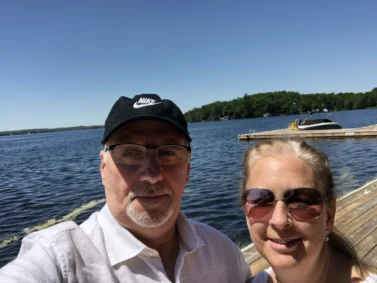
Wendy’s advice to other PF caregivers
“There is hope. Pulmonary fibrosis is not the devastating diagnosis it was just 15 years ago. Who knows what medical advances lie ahead.”
“You need to strike a balance between being realistic and hopeful.”
“You may need to shift your life a bit, but it can still be a good life.”