


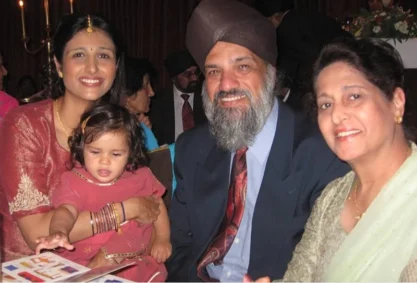
Dealing with the loss of her mother almost 10 years ago, Harprit Boiteux now helps others facing pulmonary fibrosis.
When Harprit’s mother Harvinder Barha was diagnosed with IPF (idiopathic pulmonary fibrosis) in 2011, her daughter had never heard of the disease. She thought with the right treatment, her mother would recover. After all, she was only 64.
Time and distance created unique challenges
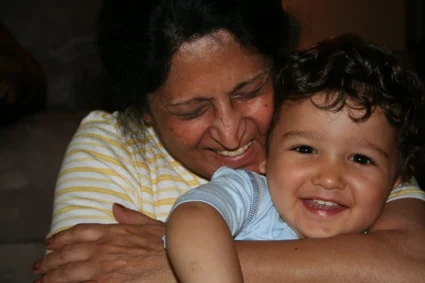
Harprit’s immediate family – her parents, brother, sister-in-law and nephew – all lived together in Nairobi, Kenya, where Harprit was born and raised. Harprit and her husband Pierre and their two young children lived in Ottawa. Her mother’s siblings also lived in Ottawa and Montreal.
“Before my Mum got sick, we would call one another every week,” says Harprit. “We’d travel to Kenya every couple of years and my Mum would visit Ottawa.”
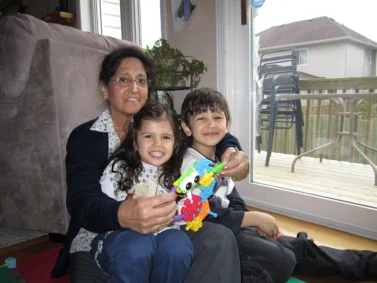
In 2011, there were no anti-fibrotic medications, either in Canada or Kenya. After she was diagnosed, following a bout of pneumonia, Harvinder was treated with prednisone. Eventually she was taking a large number of medications, some needed to deal with the effects of long-term steroid use.
Patients and families suffer mental health impacts
“I know she was struggling,” remembers Harprit. “Family members were telling me that my Mum was not eating, withdrawn and just not herself.”
“I felt so helpless, being on the other side of the world, while this was happening. I tried to be a calm, neutral voice, as other family members were dealing with my Mum’s condition getting worse,” says Harprit.
“I kept thinking she would be fine, that she would get better. I didn’t look closely enough into the disease, or her treatments, which was very unlike me. I just couldn’t face it.”
Near the end
In November of 2015, family members urged her to visit her mother. She went on her own, hoping to soothe and comfort her mother and support her father and other family members.
“When I arrived, the house already felt heavy and sad. Everyone moved quietly and conversations were whispered,” recalls Harprit. “My Mum had a glazed look. She had lost a lot of weight and was very fragile.”
During this visit, her mother asked Harprit to help her clean and organize some of her personal things and clothes. She talked to her about who should get which things when she was gone.
“I told her I’d help her clean and tidy, but that we didn’t need to talk about giving her things away. She would be fine. I just couldn’t consider anything else.”
Saying goodbye
In May 2016, Harprit’s father called and told her to come to Kenya. She booked her flights and packed immediately. She made arrangements at home and work for her absence.
“I still didn’t think I was going there to say goodbye. I didn’t get that sense of urgency from my father. I intentionally did not pack any black or white clothes, which we would traditionally wear to a funeral.”
She went directly to the hospital in Kenya to see her mother. She was hooked up to a lot of medical devices. She talked with her for about an hour, then her father took her home, saying they’d come back in the morning.
At 4 a.m., her father got a call from the hospital and the family went back. Harprit took one of her mother’s shawls with her. When they arrived, her mother was still alive. Harprit draped her in her shawl and the family began the 30 minutes of morning prayers. By the end of the prayers, her mother was gone.
Dealing with grief
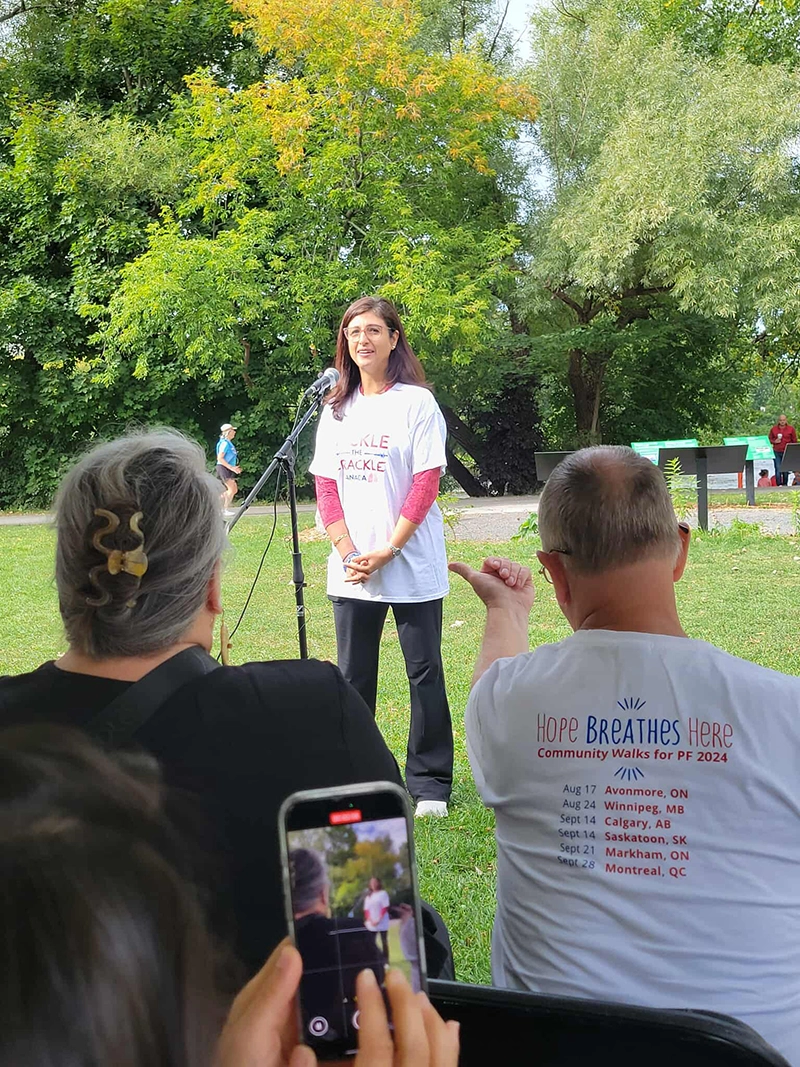
Even now, almost 10 years after her mother’s death, Harprit still feels grief, loss and guilt. She thinks about what she could have done differently. That she didn’t do enough. Maybe she should have moved back to Kenya. Why didn’t she find out more? She sought counselling, which has helped.
She has a few sweaters and shawls of her mother’s, which she wears sometimes. “It makes me feel like she’s hugging me still.”
Eventually, she became curious: about what happened to her mother; what she went through. “I found the CPFF website and got in touch to see what I could do to help.”
Healing as a volunteer with CPFF
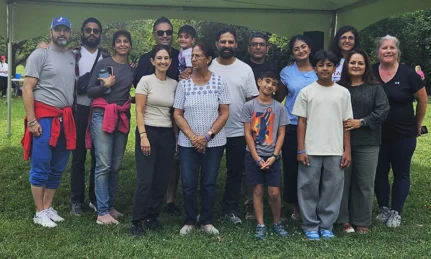
She became a volunteer to learn more about the disease and support people and families living with PF. Since the summer of 2024, she has helped coordinate the Ottawa Support Group meetings and planned the first Ottawa Walk for CPFF last September.
“Through the Ottawa Support Group, I’ve learnt so much, not only about ongoing research and drug trials, but also from the members’ personal stories and experiences,” says Harprit. “Many say they’re grateful to have this group, especially in the early stages of their diagnosis when they had so many questions and felt very isolated.”
Harprit has also shared her story in her employee newsletter, raising awareness of pulmonary fibrosis, and encouraging her colleagues to designate donations to CPFF in its charitable giving program.
What advice would she give others facing PF?
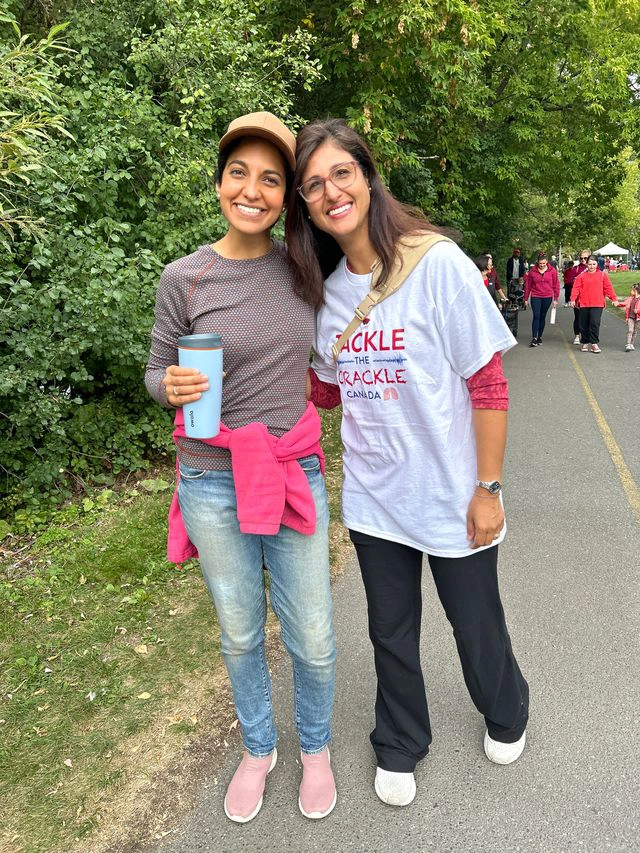
“Reach out and join a CPFF support group. We can all lean on friends and family, but there is something special about connecting with others dealing with the same illness, questions, and fears, that you are facing.”
“I am so grateful to be able to give to this community. It has helped me to heal the wounds of my grief.” We know her mother would be proud.